
The biggest misunderstandings about Irix Medical Data aren’t just about the data itself. They are about the underwriting decisions that follow.
Underwriters aren’t paid to gather information. They’re paid to make decisions. Irix Medical Data helps by providing fast, clinically interpreted insight that can reveal severity, add context, reduce unnecessary APS orders, and improve confidence in the final outcome. Yet misconceptions about Medical Data still persist. Here are six we hear most often and why they deserve a closer look.
Myth: “I’ll see everything I need to see in Irix Prescription Data.”
Prescription Data is one of the most-trusted underwriting assets in the U.S., with a hit rate approaching 96%, strong clinical interpretation, and a proven ability to surface conditions underwriters care about. Its value is unquestioned. The challenge is that some of the most important underwriting signals never result in a prescription fill.
So the question isn’t Prescription Data or Medical Data. The question is how much you’re willing to miss by ordering only one.
Medical Data can reveal conditions that aren’t typically treated with prescription drugs, add context around severity and management, and clarify why multi-use medications such as GLP-1s were prescribed.
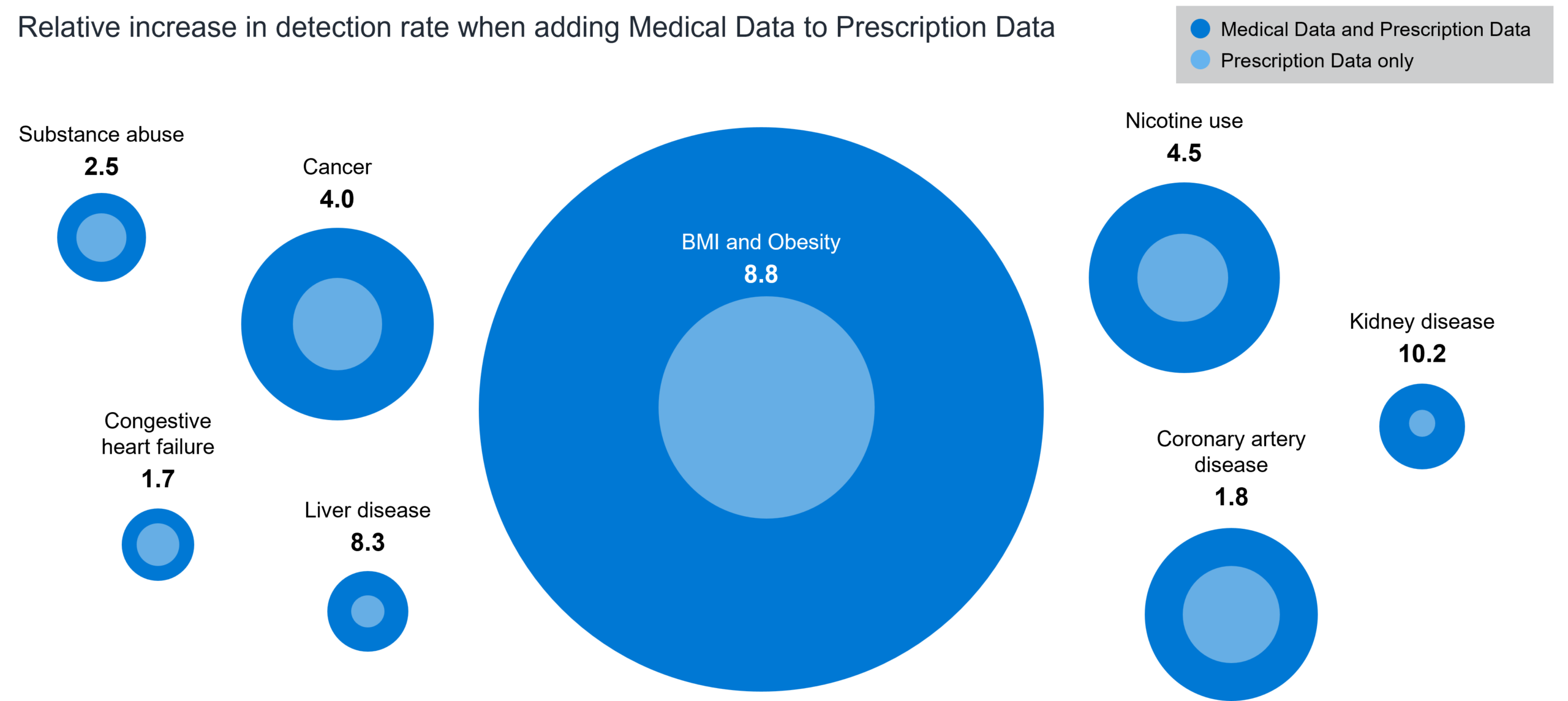
Many conditions of interest to life insurance underwriters are not usually treated with prescription drugs, and some that are—like cancer—are treated with drugs administered in clinical settings. Such impairments are highlighted by Medical Data anywhere from two to ten times as often as they are in Prescription Data.
Ordering both datasets identifies nicotine use more than four times as often, because relatively few smokers use prescription cessation aids. Cancer also appears about four times as often, and serious kidney disease about 10 times as often, because these conditions are usually treated in clinic or hospital settings. Medical Data is also better at surfacing substance abuse, ER visits, addiction treatment, and clinically relevant information about build and BMI.
Together, the datasets provide a more complete view of both the presence and severity of the conditions underwriters care about most. That’s why many clients say most cases can be decided on these assets alone.
Myth: “Medical billing codes are too noisy to trust.”
We’ll be the first to admit billing codes are a sore point for providers, but no one gets paid without submitting them. The long and the short of it is that virtually everything relevant to patient health appears in codes, but not everything in codes reflects patient health. Our clinical staff, actuaries, and data scientists help Irix uncover the difference.
That’s why the Irix Rules Engine applies clinical and actuarial logic to separate meaningful signals from administrative noise.
For example, we limit the influence of diagnosis codes entered to justify diagnostic testing, or one-off codes with no sign of follow-up treatment.
For additional information about the accuracy and relevance of medical billing codes, read What’s up with “upcoding”?
Myth: “If I start using Medical Data, my APS orders will go way up.”
Because Medical Data is comprehensive, new users often suprised by the number of conditions surfaced by the tool. If underwriters are used to ordering an APS whenever a condition appears, APS orders may rise at first.
But the Irix Rules Engine helps distinguish significant conditions from those that likely aren’t. As underwriters become familiar with Irix interpretation, that temporary increase leads to fewer unnecessary APS orders and fewer orders overall.
Training—which we provide for free—helps teams quickly reach that point. And when an APS is still needed, Medical Data points you to the right provider and tells you what to look for.
Want to learn more? Read APS orders (should) plummet when you adopt Irix Medical Data
Myth: “Juveniles haven’t had time to develop a meaningful claims history.”
The Medical Data hit rate for juvenile applicants (ages 0–17) is over 71%. That’s nearly as good as the rate for the overall population, irrespective of age.
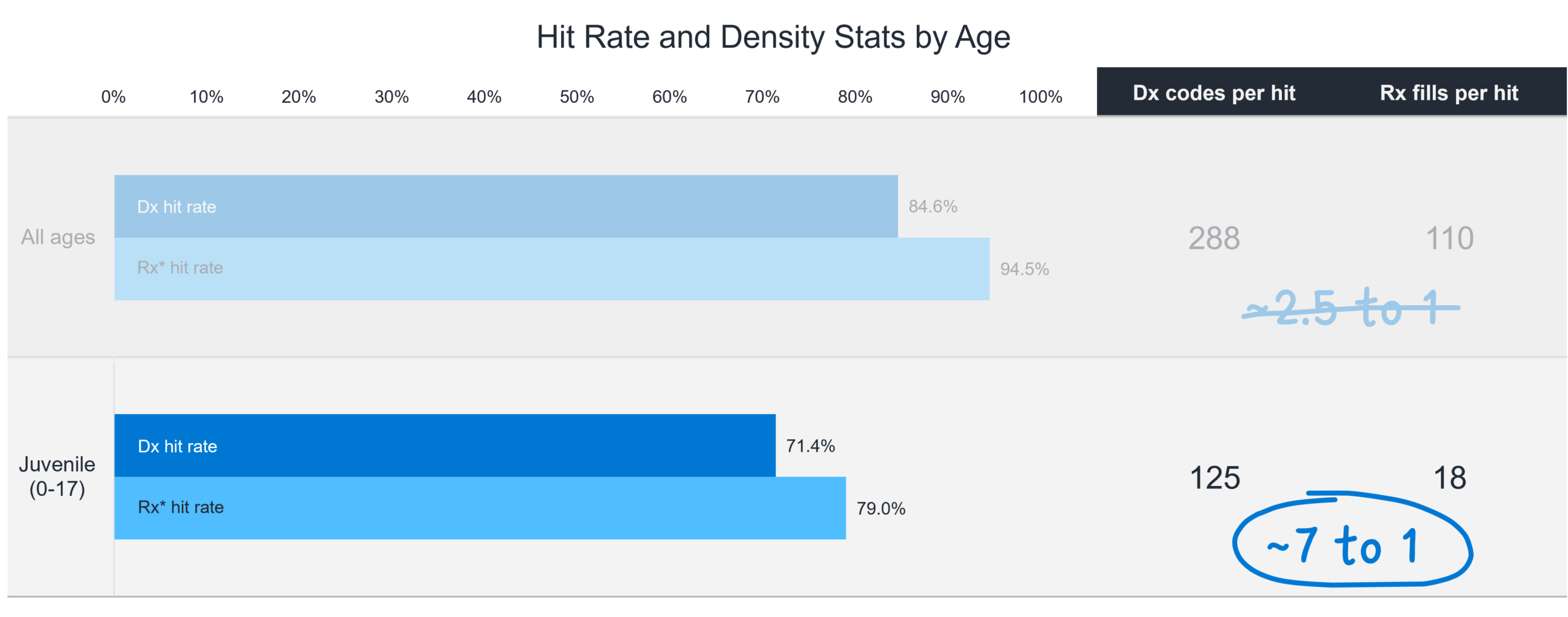 The Medical Data hit rate for juvenile applicants is nearly as high as it is for the overall applicant population. But the ratio of Dx codes to Rx hits shows that for younger applicants, Medical Data offers better density.
The ratio of medical codes to prescription fills is even more telling. Across all ages, we see about two medical claims per prescription fill. Among applicants under 17, medical claims outnumber prescription fills almost 7:1—making Medical Data especially valuable for younger applicants.
Serious impairments are less common in juveniles, but when high-severity conditions exist, the mortality implications still matter. Given the volume of claims data returned, underwriting juveniles without Medical Data would be … delinquent.
We’ve made this case in more detail here: Juvenile life insurance applicants have more health data than you think
Myth: “If I order Medical Data on every applicant, I’ll end up with too many declines.”
It’s easy to assume more visibility means more declines. In reality, Medical Data doesn’t simply uncover additional reasons to decline. It can also help carriers confidently issue applicants they might previously have declined, such as people with well-managed chronic conditions or a “red” drug prescribed off-label for a benign use.
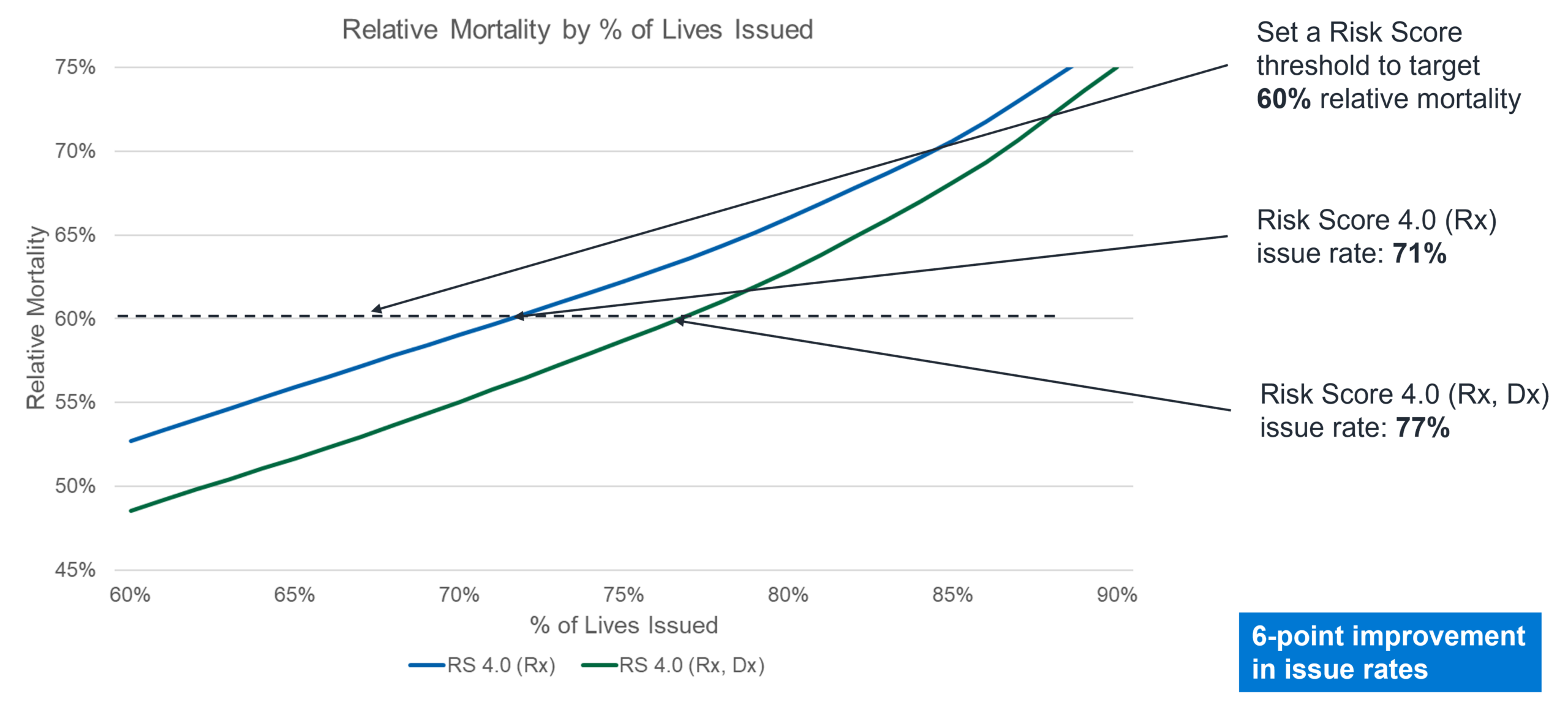
Compared to Risk Score (Rx), Risk Score (Rx, Dx) yields an increase in issue rates at any given relative mortality (or improved mortality if issue rates are held constant).
Reinsurers have tested this by running Irix Risk Score with Prescription Data alone, then rerunning the same sample with Medical Data added. The conclusion: Medical Data helps carriers maintain mortality while improving issue rates—the opposite of increasing declines.
Myth: “I can just order an EHR and be done with it.”
We’re big fans of electronic health records—that’s why we created Irix EHR.
Medical Data and EHR aren’t competitors. They answer different questions. EHRs provide deeper insight into conditions treated at a specific site, while fulfillment rates are about 50%, timing can range from hours to days, and interpretation is often limited. Medical Data delivers instant, indexed, interpreted insight into almost all applicants and nearly any provider encounter. In many cases, Medical Data helps underwriters determine whether an EHR is needed at all. When additional detail is required, EHR can provide it.
The myths about Medical Data may be persistent, but the evidence is stronger. Used alongside Prescription Data, Medical Data helps underwriters see more, decide faster, reduce unnecessary APS orders, and improve issue rates—without sacrificing mortality. That’s not just better evidence. It’s better underwriting decisions from the start.